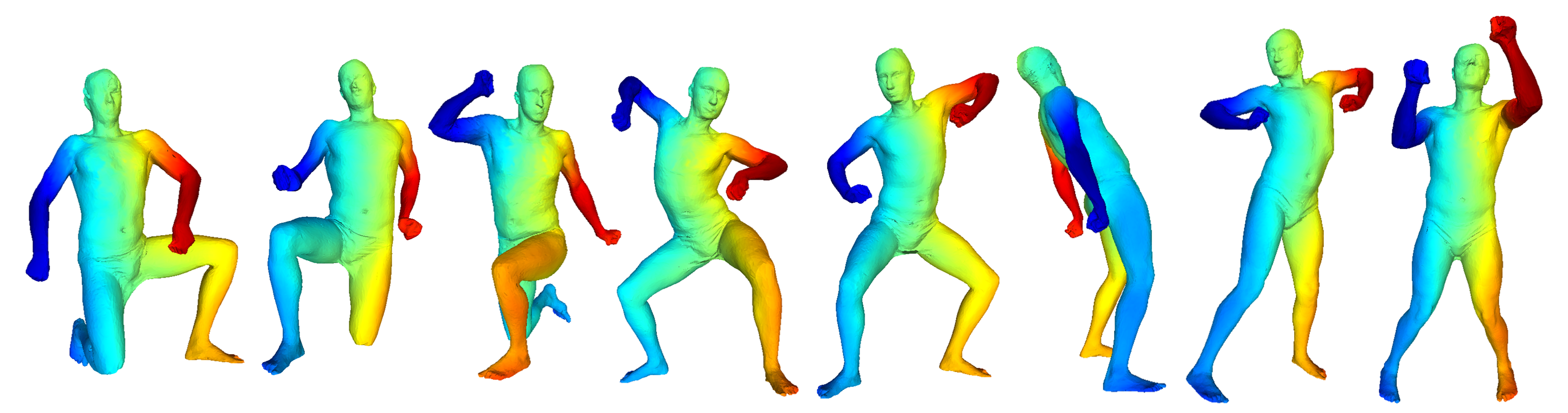
To better address the deformation and structural variation challenges inherently present in 3D shapes, researchers have
shifted their focus from designing handcrafted point descriptors to learning point descriptors and their correspondences in a
data-driven manner. Recent studies have developed deep neural networks for robust point descriptor and shape correspondence
learning in consideration of local structural information. In this paper, we developed a novel shape correspondence learning network,
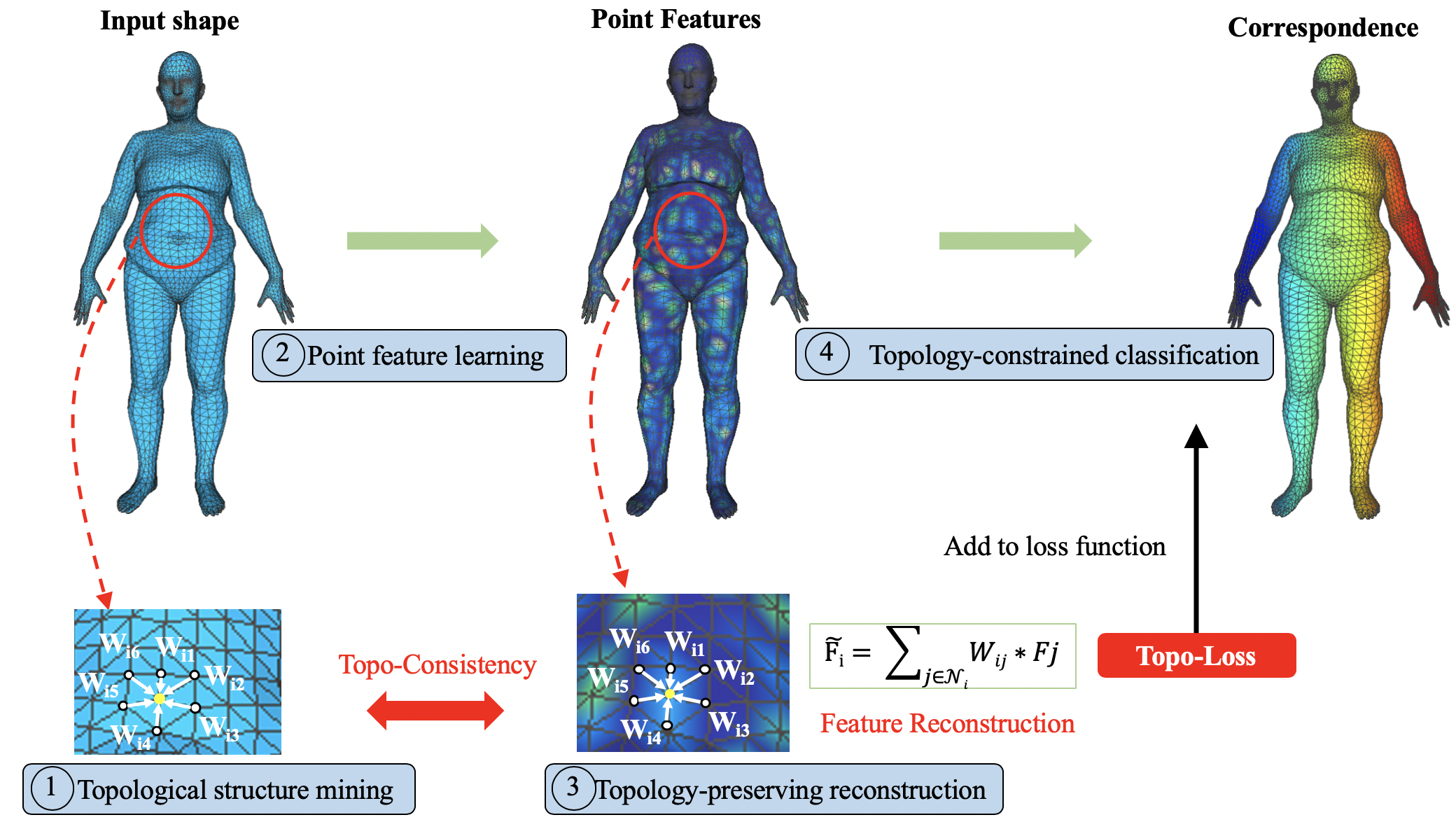
called TC-NET, which further enhances performance by encouraging the topological consistency between the embedding feature
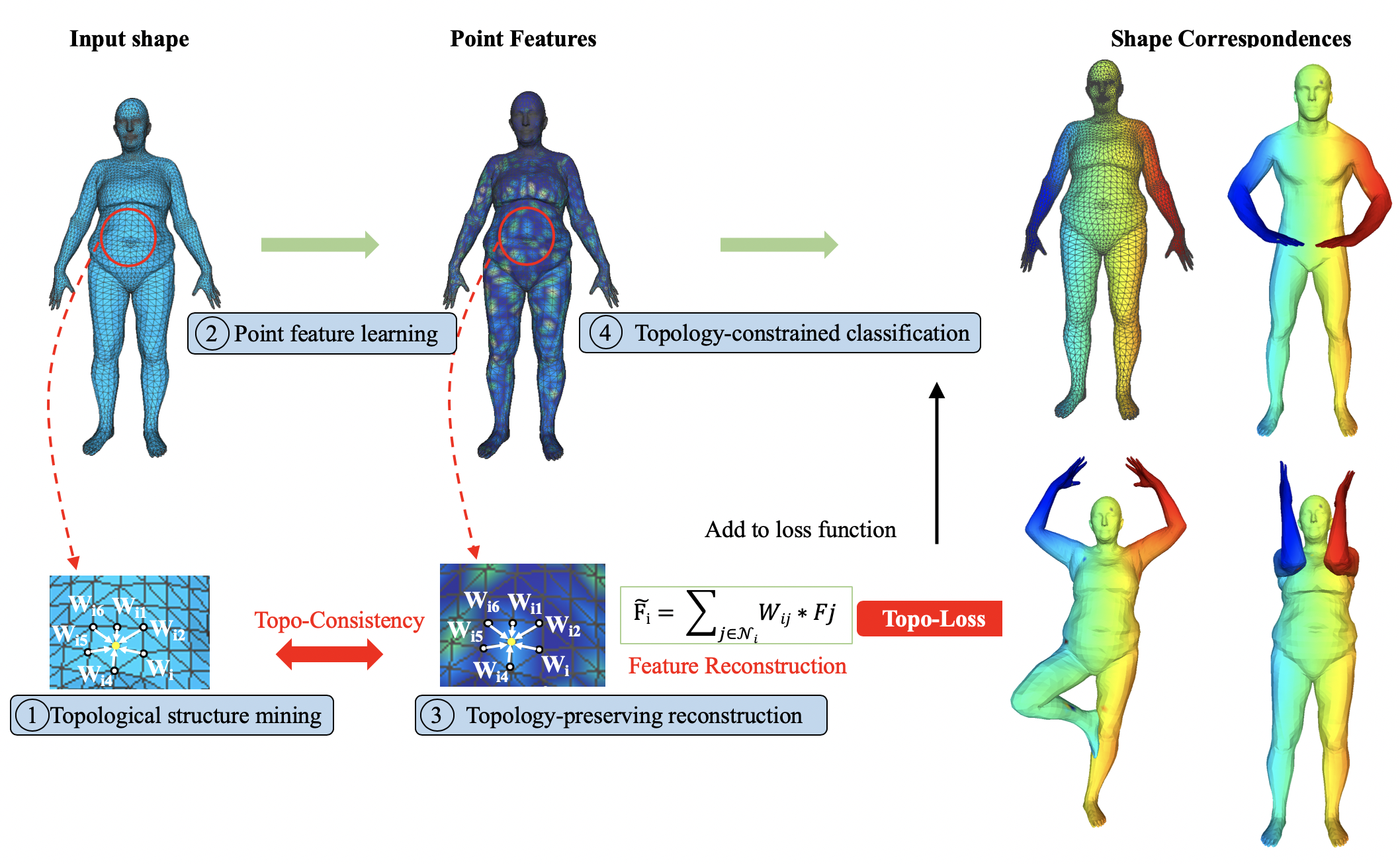
space and the input shape space. Specifically, in this paper, we first calculate the topology-associated edge weights to represent the
topological structure of each point. Then, in order to preserve this topological structure in high-dimensional feature space, a structural
regularization term is defined to minimize the topology-consistent feature reconstruction loss (Topo-Loss) during the correspondence
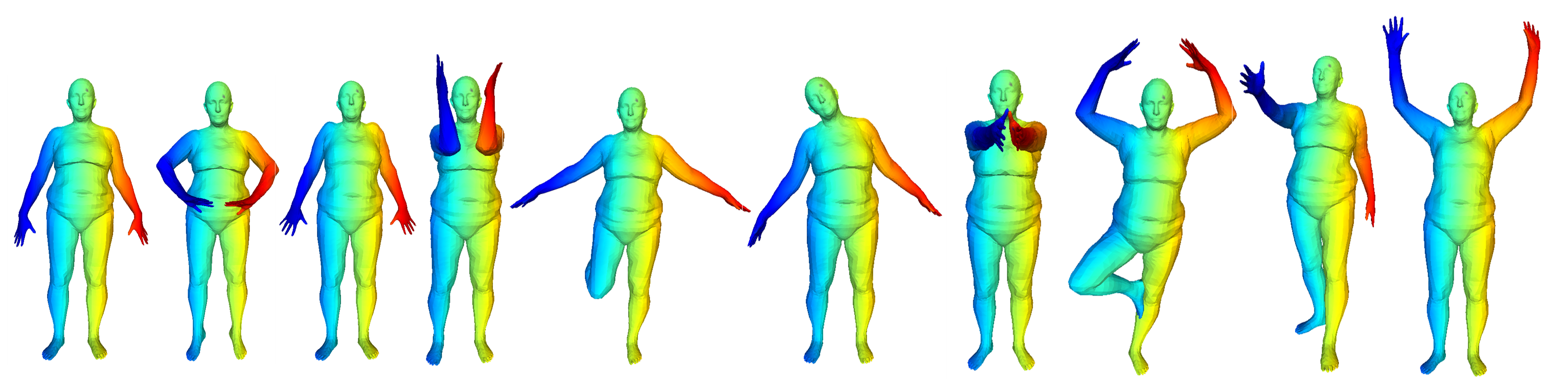
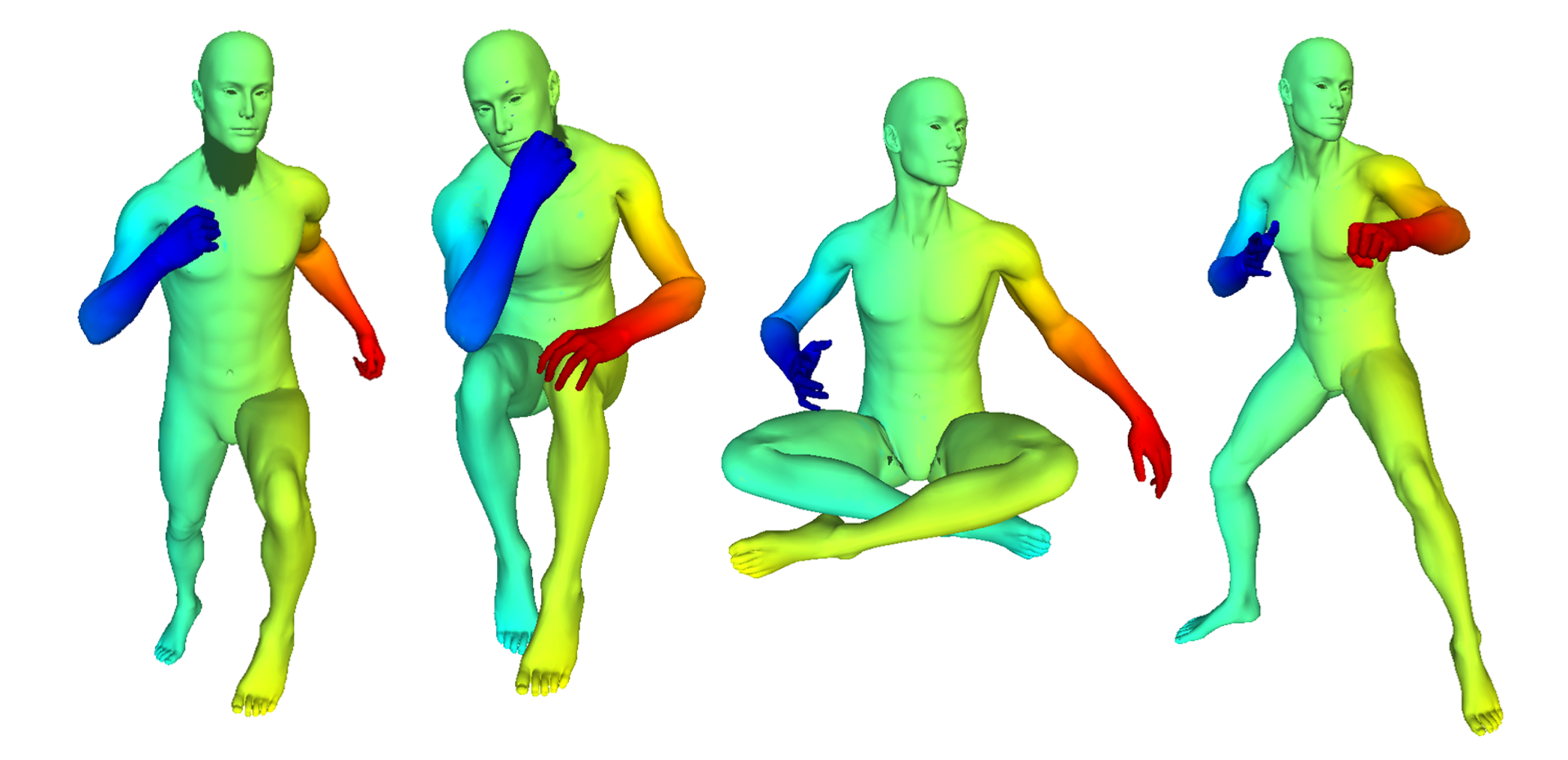
learning process. Our proposed method achieved state-of-the-art performance on three shape correspondence benchmark datasets.
In addition, the proposed topology preservation concept can be easily generalized to other learning-based shape analysis tasks to
regularize the topological structure of high-dimensional feature spaces.
|